Don’t use AI to make art. Use childhood trauma like a real artist.
Straight from my DMs, without becoming a populist.
I saw this slogan this morning, wedged between my cooling coffee and footage of high school students protesting. I snorted. Then I stopped snorting, which is usually my sign that something deserves a paragraph.
The same week, a clip of Leigh Bardugo kept finding me, meaning an algorithm decided I was due. She argues AI has no place in art. People reach for it because art is hard, and AI will only ever steer you toward mediocrity, never greatness.
She’s right. I want to say that before I complicate it, because complicating things is my job and I rarely know when to stop.
Mediocrity didn’t move in with AI. It’s been squatting here for decades, eating out of our fridge. AI was raised on us. It learned whatever we uploadedapplauded. So when it hands us something polished and forgettable, it’s just doing our voice. And the impression is good. That’s the splinter nobody wants to pull out.
Art history keeps its best secrets in the footnotes. Colette wrote the Claudine novels; her husband, Willy, signed them and took the applause. Margaret Keane painted the big-eyed children; Walter Keane took the credit and the talk-show couch. The pattern is old enough to be an heirloom. Whoever owns the house gets to sign the painting.
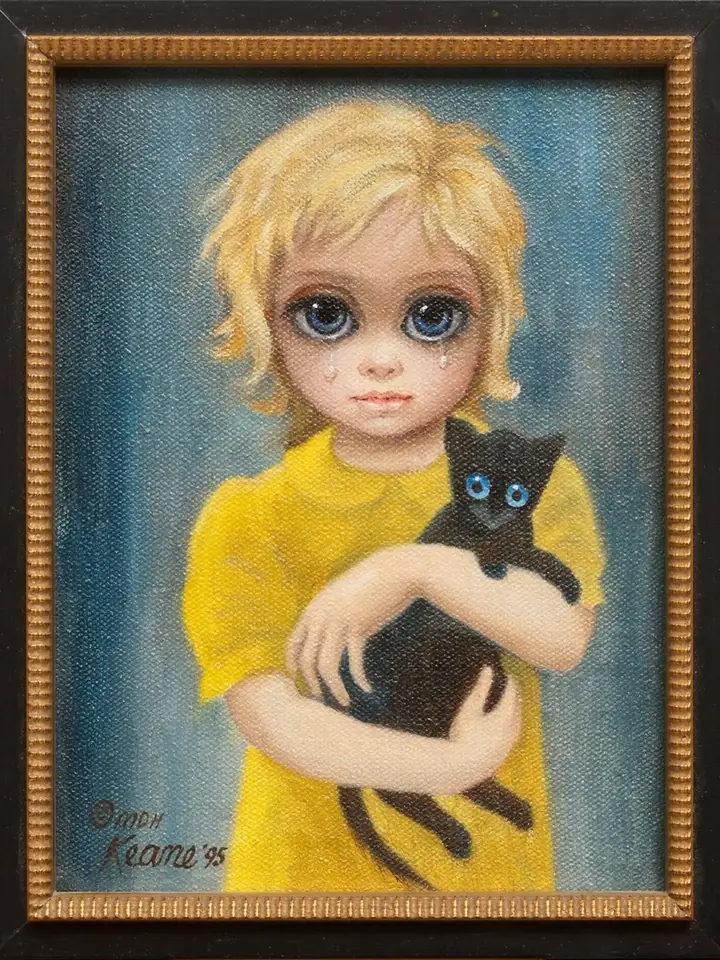
We were so comfortable with this setup that we gave it a job title. Ghostwriter. A whole profession built on the idea that the person with the name and the person with the talent don’t need to share a body. And the term is even worse in French. Google it.
AI is just the latest ghostwriter, the first one cheap enough for everyone, trained on the average Joe. We call it democratization. It’s closer to mediocritization.
The arrangement itself has always existed. It’s just gone mainstream. Skipping the work used to require an inheritance. Now it requires a subscription.
To artists afraid their work will be stolen: I get it. Execution is intellectual property, and it deserves protection.
But execution isn’t what makes a work last. Its angle does. Meaning the door you noticed in a wall everyone else walked past. You can train a model on every door ever painted and it still won’t understand why you wanted out.
Not that there’s nothing to worry about. Can they shadow-ban you? Sure. Can they rewire people’s attention until nuance looks like a loading wheel? They’re working on it.
Bardugo nails this part: if you rage against AI and then spend your evening feeding Instagram, you’re outsourcing your taste. Eventually your ethics follow.
Without lived experience, there’s no art. There’s only arrangement, and AI is a master of arrangement. So were the ghostwriters.
Which brings me back to the slogan. Art doesn’t need your trauma. It isn’t necessarily self-expression either. It’s using what you’ve lived to question the society you live in. Trauma is the incident. Experience is the way of seeing you gained from it.
We like to call what we make “fiction” as if we pulled it out of thin air. We didn’t. Thin air is mostly other people. Fiction is the shape we give to what we actually sensed, so someone else can finally sense it too.